Rickenbacher fry-pan
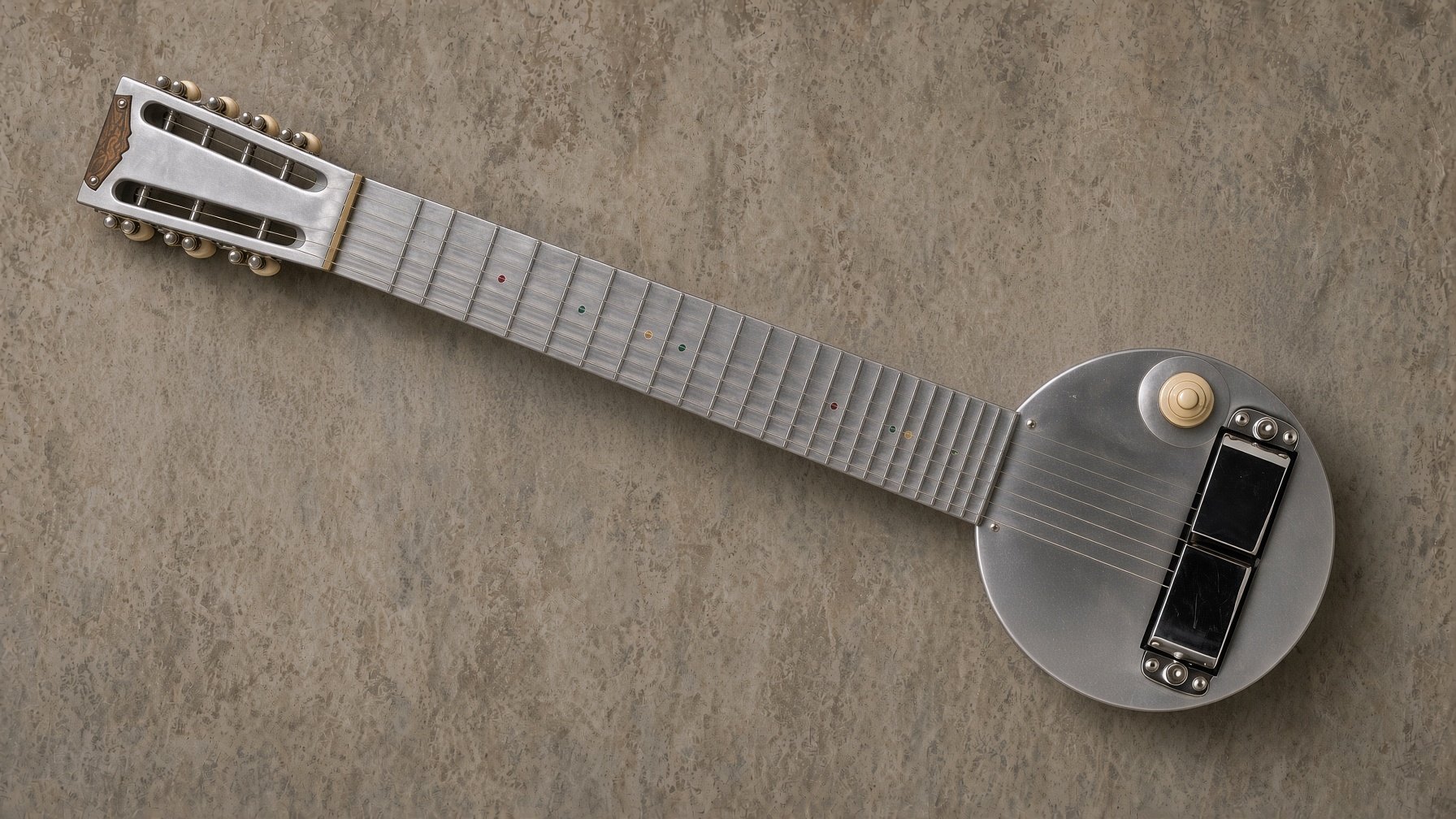
Seven strings. The round aluminum body the electric steel was born in. He prefers the old Rickenbacher horseshoe sound.
Hawaiian steel guitar
Melodic, understated, and played the way David “Feet” Rogers asked him to play — from the heart, and never above anybody else.
Lānaʻi City, 1952. Farrington High, 1970. Home now at ʻAiea Heights, Oʻahu.
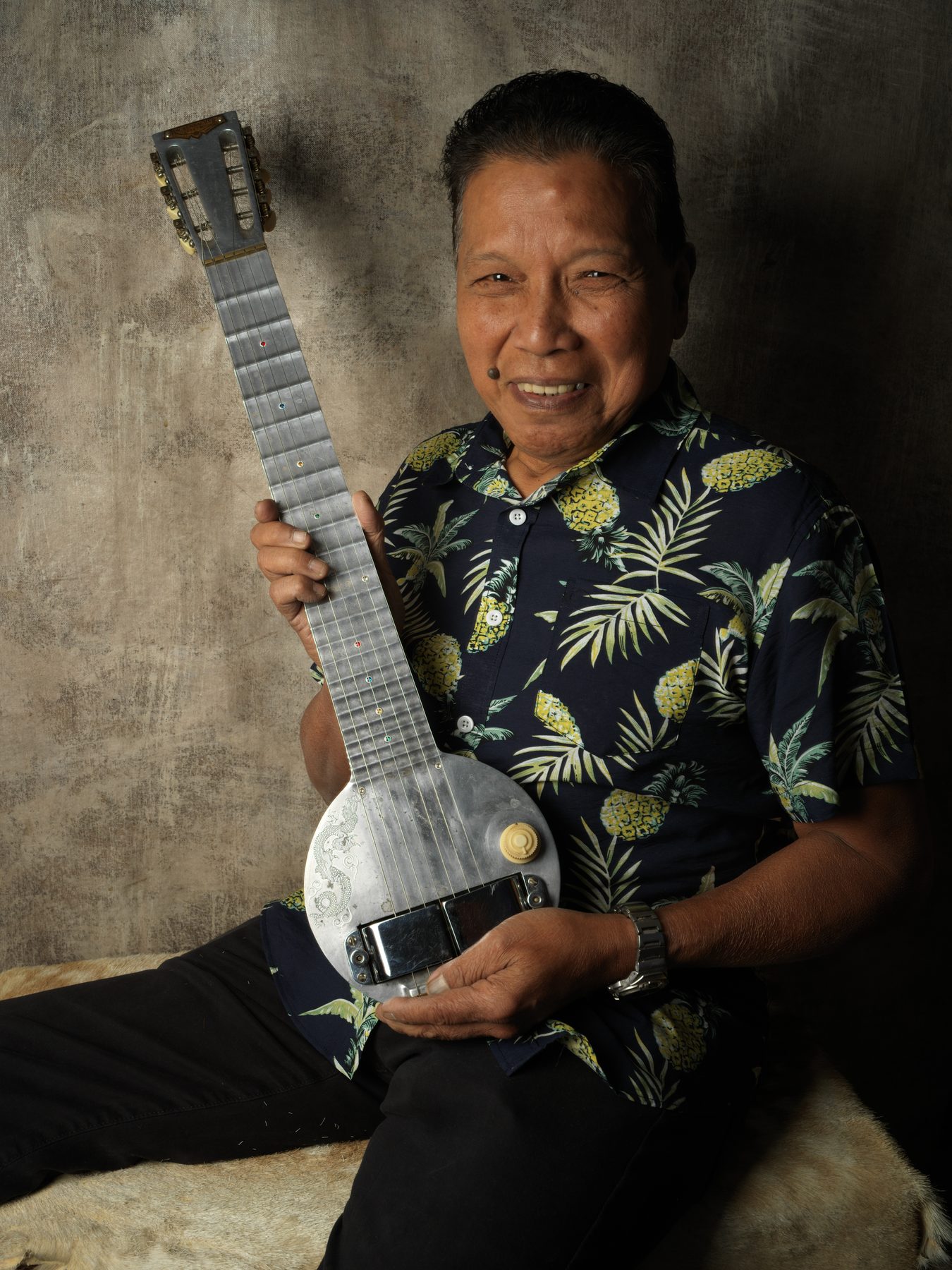
October 2026, Austin. He honored David “Feet” Rogers at the Steel Guitar Hall of Fame induction, on Feet’s own Bakelite, in Feet’s D tuning.
The tribute setThe story
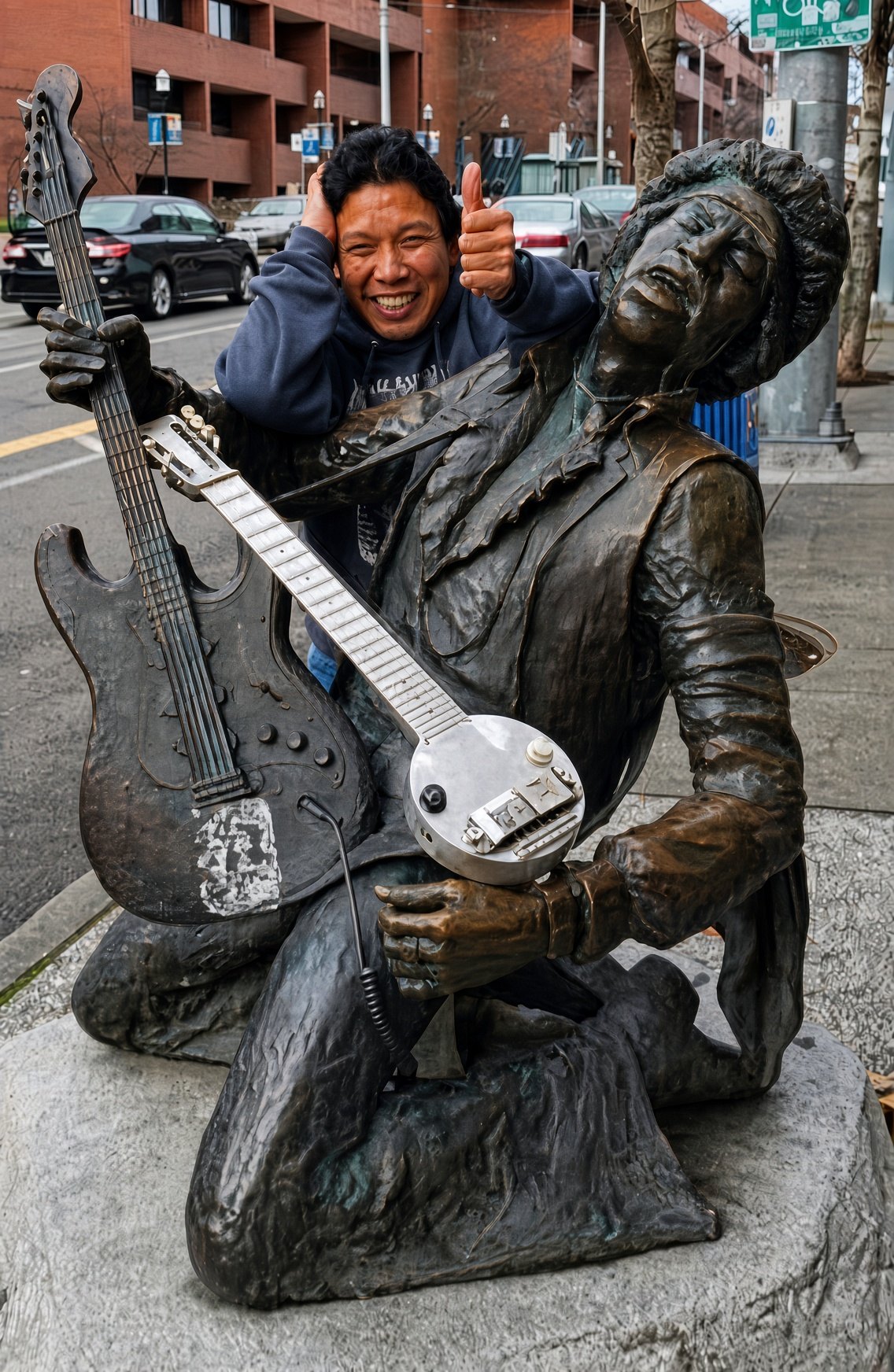
Bobby, Jimi, and his 7 string Frypan.
1952
Born December 17, on Lānaʻi. The first seven years were on that island, before the family crossed the channel.
1959
They moved to Oʻahu when his father took a promotion in the Dole Pineapple office. Bobby had been born with polio, before a vaccine, and could not always keep his balance. The next years were in and out of Shriners Hospital.
There
The family was already musical. With time on his hands he learned ʻukulele, and it came naturally. The steel guitar was still years away.
1970
He graduated from Farrington High playing blues and rock electric guitar in a band. Santo & Johnny’s “Sleepwalk” — a New York record, not a Waikīkī one — had already shown him what a steel could do to a melody.
1977
Living in Makiki, riding with his brother Stanley, a cassette came on: the Gabby Pahinui Hawaiian Band, Gabby on steel, “Blue Hawaiian Moonlight.” That was the turn toward Hawaiian steel.
Market
Working at Tamashiro Market, he taught himself C6 by copying David “Feet” Rogers of the Sons of Hawaiʻi — not yet knowing Feet played a different tuning. Feet’s cousin Ronald Kanahele found him there. A stolen Bakelite changed hands in both directions, and so did a way of being. Feet’s lesson was not a book of licks.
A6
Billy Hew Len’s A6 — low to high, C♯ E F♯ A C♯ E — would not fall under a C6. Months of trying, then the realization he still tells: it was the same idea as his C6 if he added a G above the high E.
2017
He retired from Tamashiro Market and joined the Taj Mahal Quintet. Folk, blues, rock, country, Hawaiian songs. At first he carried both a standard electric and the lap steel.
Now
Home is ʻAiea Heights on Oʻahu. He still records, still sits in, still plays the steel festivals, and he hands Feet’s advice to younger players without dressing it up.
“Always play from your heart.”
“When you play music, always have fun, and the main thing is making people happy. No worry about competition. It’s not a sport. Just be happy and smile — and never, ever, put yourself above anybody else.”
The sound
Low to high: C, E, G, A, C, E, and the high G he added so Billy Hew Len’s A6 ideas would sit in his hands. Move the bar and the shape stays put. The key is what travels.
This is a listening sketch of that open tuning, not a diagram of every guitar he owns. For the Feet Rogers tribute he used Feet’s D tuning.
Open strings
C6
Fret open · high string on top
Open C6, waiting.
Move the bar. Shapes stay; the key changes.
Seven strings. The round aluminum body the electric steel was born in. He prefers the old Rickenbacher horseshoe sound.
Console 8 lap steel guitar, 1960.
In October 2026 he played David “Feet” Rogers’ own Bakelite Rickenbacher, in Feet’s D tuning, for the Hall of Fame tribute.
In the room
Soloist on three Grammy-winning Hawaiian compilations. On Taj Mahal’s Live on Kauaʻi! with the Hula Blues Band, which took the 2016 Nā Hōkū Hanohano Award for R&B album of the year. Before the road, years of Slack Key Sundays and the Bobby Ingano Trio with Adam and Kaipo Asing.
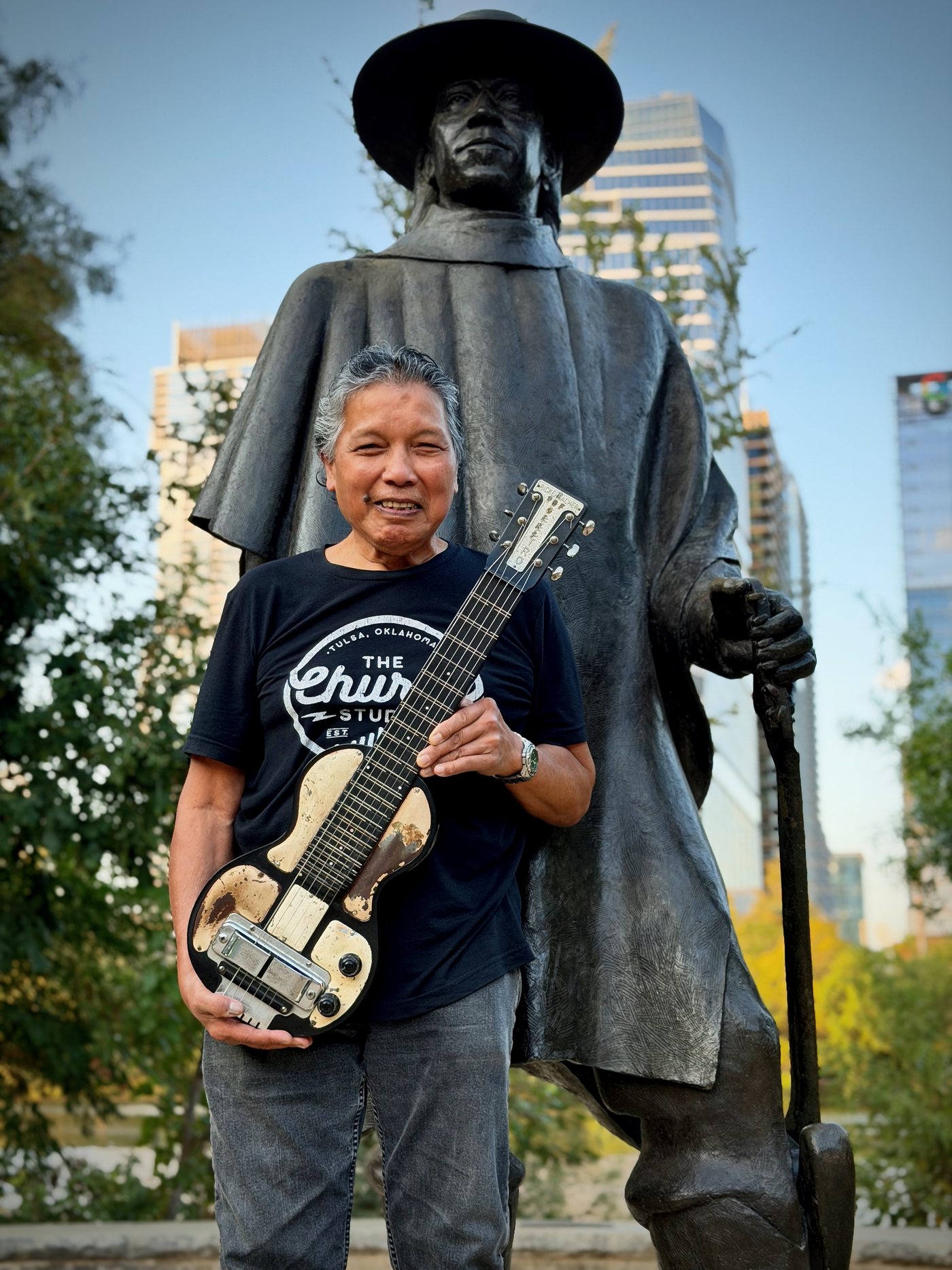
Bobbie, Stevie, and Feet’s Post-War Bakelite.
Records
Steel ’n Love is the one where he had the whole say — he owns those masters. He owns the songwriting copyright to Stranger Here. Steel Reflections is listed last — Bobby doesn’t own those masters.
Disclaimer: those notes are Bobby’s account of the rights. They are not a legal opinion, and they are not a claim against any label or publisher.
His masters
2010
The first album where he had the whole say. He owns the masters. A two-man studio record with co-producer Mark Amundson: soft and traditional at the open, blues-rock in the middle, Aloha ʻOe to close. Three of the pieces are his.
Noted in the Star-Advertiser, 2010
Austin · October 2026
At the Austin Steel Guitar Fest, David “Feet” Rogers was inducted into the Steel Guitar Hall of Fame. Bobby, his protégé, played the tribute on the Bakelite Rickenbacher that belonged to Feet.
Listen
Darling, Autumn Leaves, Hawaiian War Chant, Aloha ʻOe. He owns the Steel ’n Love masters.
Open Steel ’n Love on Apple MusicBobby Ingano is a Hawaiian steel guitarist from Lānaʻi, based in ʻAiea Heights on Oʻahu. He is the protégé of David “Feet” Rogers of the Sons of Hawaii, and has played lap steel with Taj Mahal since 2017.
Bobby Ingano plays Hawaiian lap steel guitar, including a seven-string Rickenbacher fry-pan and a 1960 National Model 1008 console. His style is melodic and understated, the way Feet Rogers taught him: from the heart, and never above anybody else.
Bobby Ingano was born in Lānaʻi City in 1952. His family moved to Honolulu in 1959. He lives in ʻAiea Heights, Oʻahu.
Bobby Ingano learned from David “Feet” Rogers, the steel guitarist of the Sons of Hawaii. He taught himself C6 by copying Feet, and still passes on Feet’s advice: always play from your heart, have fun, and never put yourself above anybody else.
Yes. Bobby Ingano joined Taj Mahal’s group in 2017, after Taj heard him on the American Epic sessions and waited until Bobby retired from Tamashiro Market. He plays lap steel with the Taj Mahal Quintet and appeared on the Hula Blues Band’s Live on Kauaʻi!, which won the 2016 Nā Hōkū Hanohano Award for R&B album of the year.
Bobby Ingano’s records include Steel ’n Love (2010), Kolohe Princess (2010), Can’t Help Falling in Love (2021), Holidays in Hawaii (2023), and the solo album Stranger Here. He owns the masters of Steel ’n Love. An earlier album, Steel Reflections (1999 / 2006), is not his to license.
Bobby Ingano is a soloist on three Grammy-winning Hawaiian music compilations. He is also a studio musician who has recorded with Jake Shimabukuro, Los Lobos, the Brothers Cazimero, Martin Pahinui, Amy Hānaialiʻi Gilliom, George Kahumoku Jr., Willie K, and the Hoʻopiʻi Brothers.
Bobby Ingano’s official site is bobalut.com. It has his story, his records, and listening links. He plays steel festivals, sits in, and tours.